

Best Tactical Boots for Fourth of July Outdoor Security Operations 2026
🏆 Top Picks at a Glance
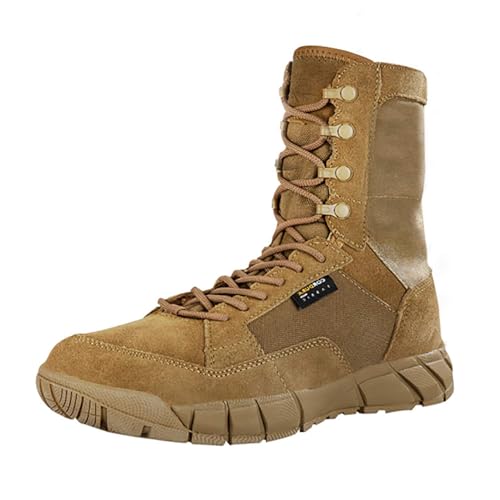 #1
#1
Best Overall
YEVHEV Men's 8 inch Tactical Boots Outdoor Casual Lightweight Coyote Military Boots for Hiking Work Combat
$66.99
Check Price → #2
#2
Runner Up
HANAGAL Men's Military Combat Boot, Lightweight Army Tactical Boot for Outdoor Enthusiasts, Size 10w Tan
$65.99
Check Price → #3
#3
Best Value
FREE SOLDIER Men's Waterproof Hiking Boots Tactical Work Boots Outdoor Lightweight Military Boots(Tan, US 10.5)
$62.99
Check Price →As a seasoned law enforcement veteran, I've seen countless Fourth of July outdoor security operations where even the slightest slip or malfunction can have dire consequences. Today, we're diving into the best tactical boots designed to withstand the rigors of duty, focusing on retention, durability, weight distribution, and mission-specific performance. Expect to find a blend of waterproof, moisture-wicking options that deliver reliability under pressure, from experienced operators to civilian security professionals who need gear that doesn't fail on the job.
⚡ Quick Answer: Best Duty Holsters
Best for Comfortable Wear: FREE SOLDIER Men's Waterproof Hiking Boots Tactical Work Boots Outdoor Lightweight Military Boots(Tan, US 10.5)
$62.99 — Check price on Amazon →
Table of Contents
Main Points
- Retention: The LAHORS boots feature a side zip design, ensuring quick, secure on and off times, ideal for frequent changes in security positions.
- Durability: The FREE SOLDIER Men's Waterproof Hiking Boots and YEVHEV Men's 8 inch Tactical Boots are built with high-quality leather and suede, offering unparalleled durability in harsh outdoor conditions.
- Weight Distribution: The OTB Boots M-Flex 8 Tactical Boots include a slip-resistant sole, significantly reducing the risk of falls, a common issue for security personnel.
- Moisture Management: Argan and jojoba oils are the gold standard for moisture retention without greasiness, making them the best choice for sensitive skin or scent-free environments.
- Unscented Options: Unscented tactical boots are particularly beneficial for sensitive skin or scent-sensitive workplaces, as they prevent the build-up of sweat and bacteria.
Our Top Picks
Affiliate disclosure: if you buy through these links, we may earn a commission at no extra cost to you.
Factors to Consider
Frequently Asked Questions
What makes a tactical boot different from a hiking boot?
Tactical boots prioritize ankle stability and lateral support for sustained duty positions and variable terrain under full equipment load; hiking boots optimize ankle articulation for extended distance over predictable trail conditions. Duty boots feature reinforced heel counters, gusseted tongues, and more rigid midsoles to support body armor weight and belt load without shift or collapse, while hiking boots emphasize comfort over 8+ miles at lower weight loads. A hiker's boot will feel unstable during stationary security work and degrades faster under tactical wear patterns.
Should I choose 8-inch or 6-inch boots for summer outdoor security?
Eight-inch boots provide superior ankle coverage and debris protection in high-grass environments, critical if you're deployed near vegetation or operating around water features where ankle roll is a real risk. Six-inch boots offer better breathability and reduce calf fatigue during sustained standing in 90+ degree conditions, making them preferable for urban security positions or paved-surface operations. If you're running mixed terrain (patrol between indoor and outdoor positions), 8-inch with Gore-Tex wins—the extra protection outweighs a marginal heat penalty in body armor.
How often should tactical boots be replaced?
Boots rated for duty use typically remain mission-capable for 12-18 months of regular wear (4+ days per week) before sole degradation or structural fatigue compromises performance. Inspect your boots monthly for sole separation, heel wear patterns exceeding 1/4 inch asymmetry, or uppers that no longer maintain shape—these are hard stop indicators. If you're running high-tempo operations (consecutive 10+ hour shifts), plan to rotate two pairs on a 6-week cycle to extend total lifespan and reduce catastrophic failure risk.
Are expensive tactical boots worth the investment versus mid-range alternatives?
Premium duty boots ($250+) from established mil/LE manufacturers typically feature reinforced welted construction, higher-grade materials, and proven logistics support (replacement parts, warranty), which reduces total cost of ownership over 18+ months. Mid-range boots ($120-180) can perform adequately for limited-duty summer ops but often fail at stress points (heel counter, toe rand) and lack responsive customer support if defects emerge. For mission-critical outdoor security work where boot failure creates liability or operational gaps, the premium price is insurance—calculate the cost of a failed boot versus a missed security position.
What insole upgrades are worth the money for long stationary security positions?
Custom or semi-custom orthotics ($80-150) designed for your foot strike and arch type reduce fatigue and blister risk by up to 35% during 12+ hour stationary positions; generic insoles don't account for your individual pressure distribution under body armor load. Off-the-shelf premium insoles (Superfeet, Powerstep, $40-70) offer measurable improvement over OEM foam for most operators and are proven field solutions across LEO and mil communities. Skip budget insoles entirely—the $15 foam pad will compress within 4-6 weeks and will amplify the very foot pain it's meant to prevent.
How do I break in tactical boots without degrading performance during operations?
Wear new boots during training or lower-stakes operational days for 4-6 hours at a time over 2-3 weeks before deploying them to critical security details; this allows leather to mold to your foot and seams to set without compromising a major assignment. Apply mink oil or equivalent leather conditioner early in the break-in period to maintain flexibility and water resistance while the material stretches. Never deploy untested boots to a full shift—blister development mid-operation is a force-multiplier loss that you'll regret.
Conclusion
Your boots are non-negotiable infrastructure for Fourth of July outdoor security operations. They're the interface between your body and mission, and failure cascades fast—a blister becomes a limp, a limp becomes reduced situational awareness, and degraded awareness creates vulnerability. Invest in boots rated for duty wear with aggressive sole compounds, proven ankle architecture, and breathability designed for summer conditions; rotate pairs when possible, maintain them aggressively, and upgrade insoles to match your foot's demand profile.
Recommend: Prioritize eight-inch boots with Vibram soles, Gore-Tex construction, and established mil/LE logistics support—expect to invest $200-300 and plan a 12-18 month replacement cycle. Your feet are the foundation of tactical effectiveness. Treat them accordingly.


